

by André Pinces
At some point in the early 2000s, entire careers were built on a kind of aesthetic optimism. Not optimism in the emotional sense, but in the visual one. It was the era of the brand as lifestyle, and the lifestyle as labor. The internet hadn’t yet decided to hate us.
This was when creative work still implied something noble. You weren’t just selling a product—you were building worlds. You weren’t a freelancer—you were a “creative partner.” Every shoot felt like a promise: that you were moving toward something, that your talent would insulate you, that relevance would accumulate like a pension.
It did not.
They had not failed. They had not been fired. They had simply aged into irrelevance—quietly, bureaucratically, with no real event to mark the transition.
Just fewer replies. Shorter contracts. Younger clients. The slow erosion of perceived value, until the very skills that once defined your work became the reason it was passed over.
This is not a personal tragedy.
It is an industrial process.
And like all industrial processes, it hides its violence in systems, not stories.
The creative industry—like every other sector shaped by the frictionless logic of late capitalism—was never designed to reward depth. It was built on churn disguised as opportunity. Its heroes were always temporary: the freelancer, the startup founder, the junior who became a viral case study. Permanence was framed as stagnation. Expertise, rebranded as inflexibility. The faster you moved, the more successful you looked.
But underneath the speed was a structural sleight of hand.
Entire careers became dependent on aesthetics that were themselves dependent on platforms that were themselves dependent on economic models no one could see clearly. Algorithms became creative directors. Budgets were dictated by engagement. “Authenticity” was weaponized into a tone of voice. Even rebellion became a style guide.
The industry split in two. At the top: executives who hadn’t made anything in years. At the bottom: a rotating cast of juniors producing endless content for platforms they secretly despised.
In between: a generation trained in both aesthetics and ideas, now made redundant by the very systems they once helped construct.
It was not dramatic.
It was administrative.
Roles disappeared through title changes. Budgets shifted from production to performance. Agencies collapsed into collectives, collectives into Slack groups, Slack groups into ghost towns. Somewhere in that quiet collapse, creative labor was redefined—not as storytelling, but as asset generation.
And so the message became the metric. The image became the algorithm. The artist became the vendor.
What vanished in the process was not just opportunity—but memory.
Because this is what mid-career creatives carry: not just skill, but historical consciousness. The knowledge of how certain ideas were formed, who shaped them, why they mattered. The ability to recognize when a trend is not innovation but repetition. This kind of memory is inconvenient. It slows things down. It asks questions. It remembers the last time a corporation claimed to care about values.
This memory is a threat. So it is systemically erased.
What replaces it is a kind of permanent onboarding: younger, cheaper, faster talent fed into systems designed to extract content, not culture. No time for context. No space for doubt. Just a seamless pipeline from brief to deck to deliverable. The goal is not to think, but to format.
This isn’t about age.
It’s about attention. Or rather, the engineered lack of it.
Because even as the industry pays lip service to storytelling, it no longer requires stories—only story shapes. Hooks. Templates. Narratives reduced to slide decks. Messaging so overworked it dies before it arrives. Meanwhile, the real work—internal coherence, creative clarity, organizational voice—goes unrecognized because it doesn’t generate impressions.
It only generates meaning.
Which is now a liability.
In this context, mid-career reinvention becomes not a choice, but a condition. A kind of professional fission: break yourself into digestible parts and repackage for visibility. Say you’re a consultant. Say you’re a strategist. Say you’re a fractional something. Avoid the words that imply ambiguity, hybridity, or—god forbid—depth. The market doesn’t want perspective.
It wants usability.
But something else happens in this rupture. When the illusion breaks—when you stop performing relevance long enough to see the stage—you begin to speak differently. Not louder. Not more confidently. Just... more honestly.
For those who’ve stayed—not in the industry, but in themselves—a quieter form of work has begun to surface. Not external-facing, not platform-optimized, not designed to win awards or hashtags. But interior. Strategic. Focused on articulation over amplification. Less about narrative in the cinematic sense, more about the infrastructure of meaning: how organizations talk to themselves. How teams understand what they’re doing. How brands speak—first to others, then to themselves.
This is not a pivot.
It’s a reclamation.
A reassertion that clarity has value. That context matters. That craft is not a trend, but a form of care.
And so, beneath the metrics and behind the messaging, some of us begin again—not by reinventing ourselves, but by remembering what we actually did all along.
Not the shoot.
Not the deck.
Not the campaign.
But the thread of intelligence that ran through it all. The way we noticed things others didn’t. The way we connected ideas. The way we made people feel coherent, even if just for a moment.
This isn’t a comeback story. This isn’t a brand narrative.
There is no triumphant final act, no arc to tie it all together.
That was always a fiction.
This is just what it looks like when you keep going—without the costume of relevance, without the performance of perpetual passion. Just the work. The actual work.
Not to be seen.
But to see clearly.
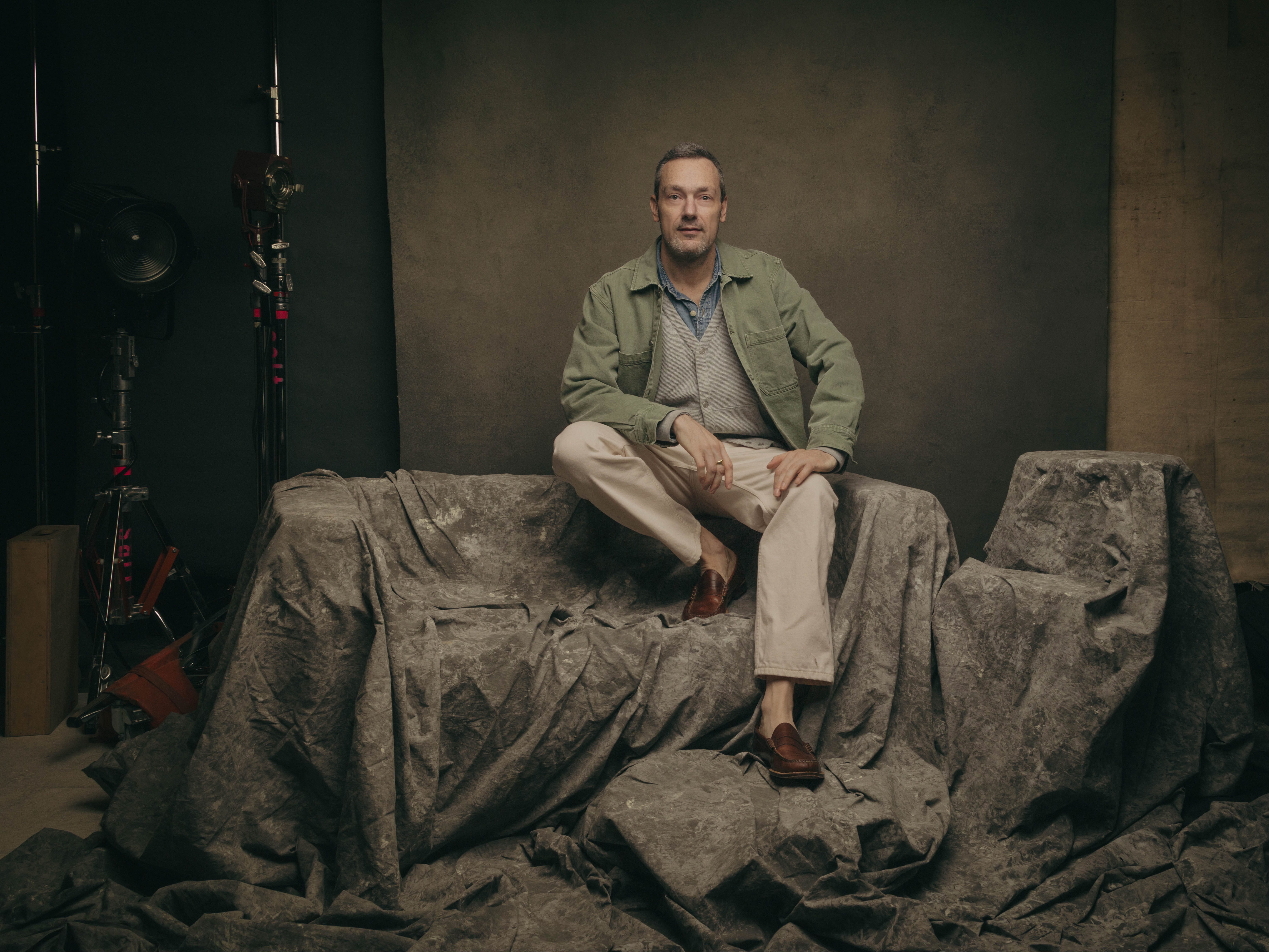
André Paul Pinces is an award-winning commercial photographer, creative director, and editorial strategist.
His “Blurgeois” style blends realism, cinematic grace, and raw elegance. With a portfolio spanning fashion, lifestyle, and portraiture, Pinces creates moody, lo-fi images with warmth and humanity. He’s collaborated with brands like Adidas, Lululemon, Reigning Champ, Vice, and Wallpaper, and has exhibited work across North America and Europe.
Instagram: @andre_pinces
LinkedIn: andre-pinces-photography
For inquiries, DM or email.