

I. The Scene Now
There are more photographs now than at any point in human history, and fewer that anyone can remember. The image, once a moment of punctuation, has become something closer to a background process. We scroll past them. Stack them. Filter them. Forget them.
Photography isn’t dead. It simply no longer asks anything of us. It doesn't provoke. It doesn’t risk. It just fills. And what it fills isn’t a cultural hunger but a kind of ambient vacancy. We consume photographs the way we consume noise. Not to understand, but to avoid silence.
We live inside an endless atmosphere of aesthetic suggestion. Everything is composed. Everything looks right. Photography, once a tool for attention, now behaves like wallpaper. It softens the edges. It makes the feed feel occupied.
Flash. Blur. Grain. Asymmetry. What used to feel like risk now arrives pre-approved, labeled as style, deployed by default.
Photographers haven’t run out of ideas. The system no longer requires them. The platform rewards presence, not authorship. Performance, not invention.

There was a time, not distant and not romanticized, when a photograph was constructed. It required waiting. Negotiation. Editing. It passed through hands. The art director. The editor. The printer. It wasn’t designed to be consumed. It was created to endure.
Even commercial images — the perfume ad, the fashion spread — carried authorship. You could feel the decisions. The model had intent. The frame had pressure. The image asked us to stop.
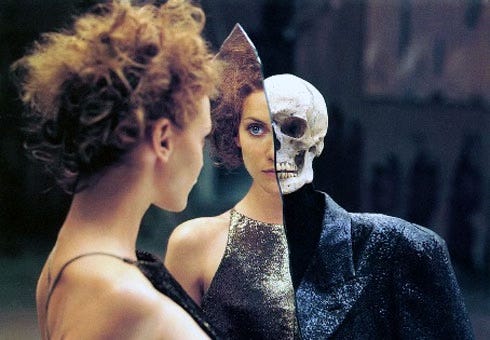
Between the mid 1980s and the early 2000s, a generation of photographers emerged who worked across fashion, fine art, editorial, and advertising. They didn’t invent beauty. They constructed systems. What they shared wasn’t a style, but a discipline.
Their work was held in place by others. Editors. Designers. Stylists. Creative directors who understood the photograph as a cultural object, not as content.
These images didn’t illustrate the moment. They defined what a moment could be.
II. The Last Generation
This wasn't a golden age. It was a functioning system. What made the images strong wasn't taste. It was tension. Every photograph passed through a structure that imposed friction. Vision had to survive a process.
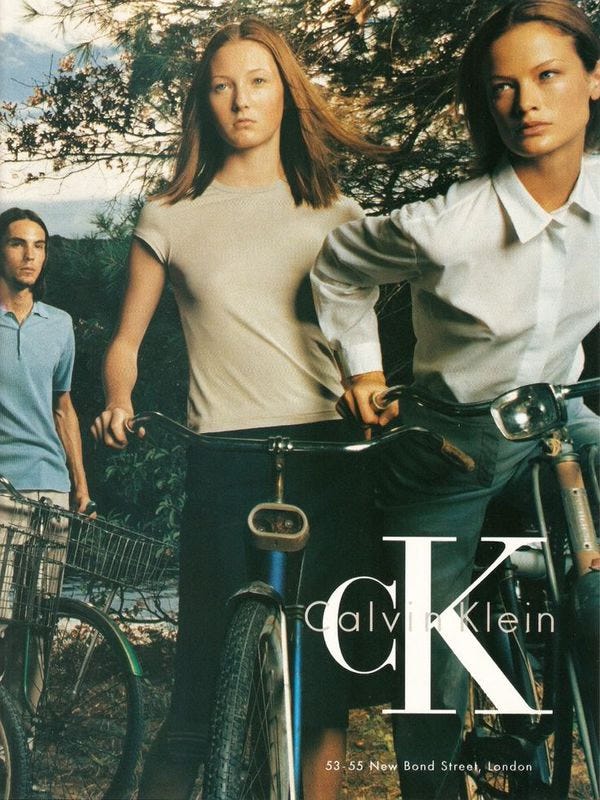
Steven Meisel could move from cinematic noir to futurist minimalism without losing authorship. His work carried a signature. But what made it land was the collaboration around him. Grace Coddington knew how to frame narrative through clothing. Anna Wintour knew when to let the work go strange. These weren't solo acts. They were part of an image machine.
Patrick Demarchelier worked in light. Elegance. Contour. His language was softness. But it became iconic because editors like Liz Tilberis gave it room. She knew how to hold tone across seasons. How to let refinement take its time.
Behind every remembered photograph was a group of people who knew when to intervene and when to disappear.
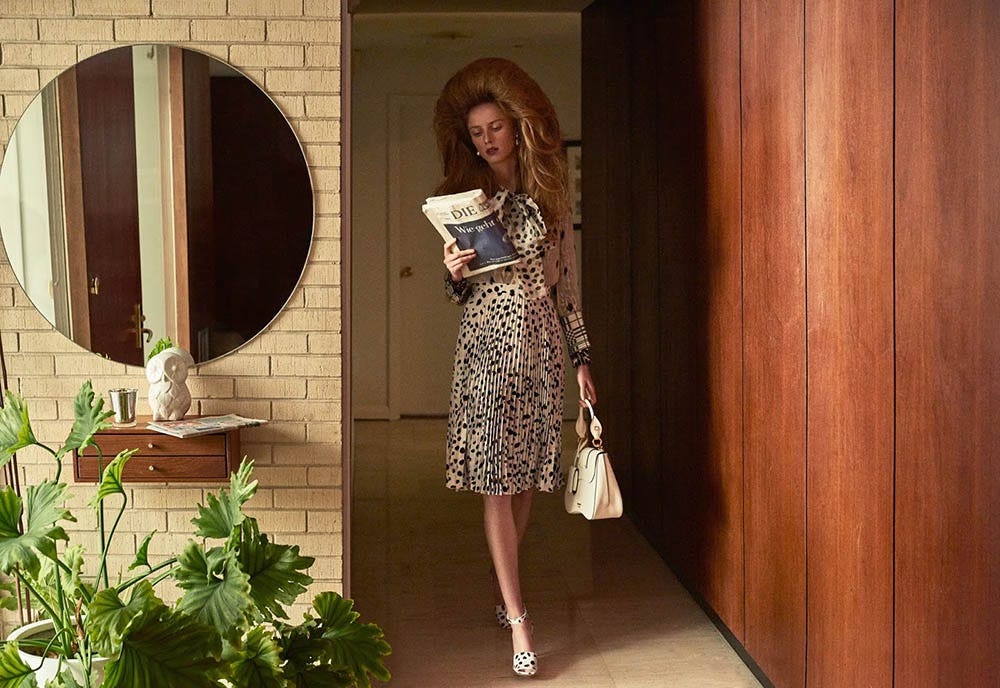
Craig McDean and Fabien Baron reduced glamour to form. Their work was precise. Almost sterile. But it had tension. Their Calvin Klein campaigns and W editorials created a language of cold desire. It was visual restraint used to generate heat.
Glen Luchford brought cinematic quiet into the frame. His early work for Prada and The Face suggested mood without plot. His images felt overheard. Katie Grand, his editor and stylist, gave him structure. Her styling operated like mise-en-scène.
David LaChapelle pushed in the other direction. Excess. Fluorescence. Performance. But his chaos was shaped by Ingrid Sischy, the editor of Interview. She gave him room, but also a container. Without that, there isn't fire. Just smoke.
These weren't lone geniuses. They were operators inside a system that respected visual pressure.
Outside fashion, others built deeper narrative structures.
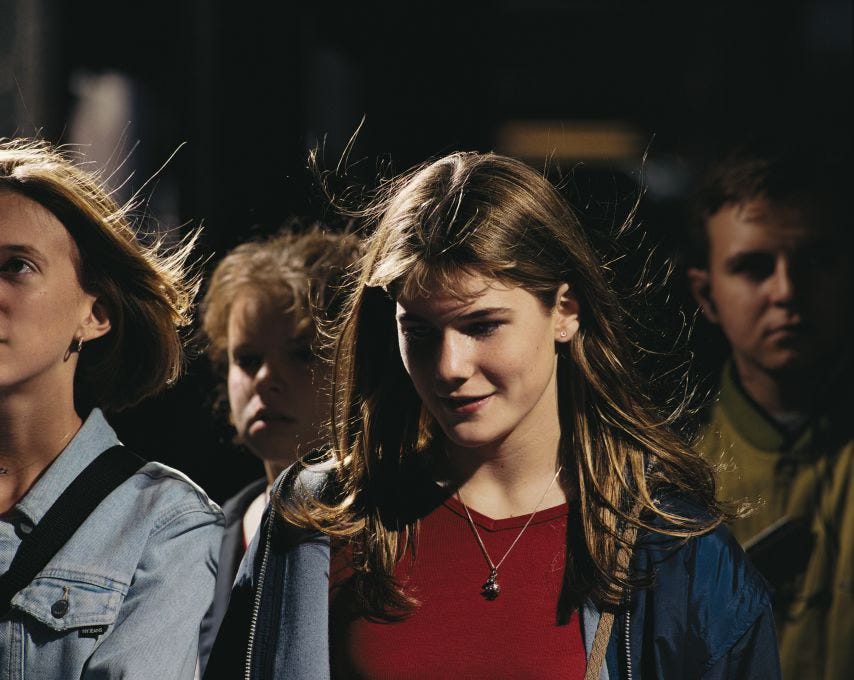
Philip-Lorca diCorcia staged fictions that looked like documents. In his Head series, portraits of male sex workers in Hollywood were lit, staged and paid. They hovered between transaction and theatre. The photograph didn't explain. It implied.
Juergen Teller took the opposite approach. Flat flash. Emotional posture. Deliberate sloppiness. His work rejected polish and became its own kind of purity. He used irony to create sincerity.
Nick Knight treated photography as material. His work for SHOWstudio merged image, motion, code, and fashion into something else entirely. He didn't photograph. He rendered.
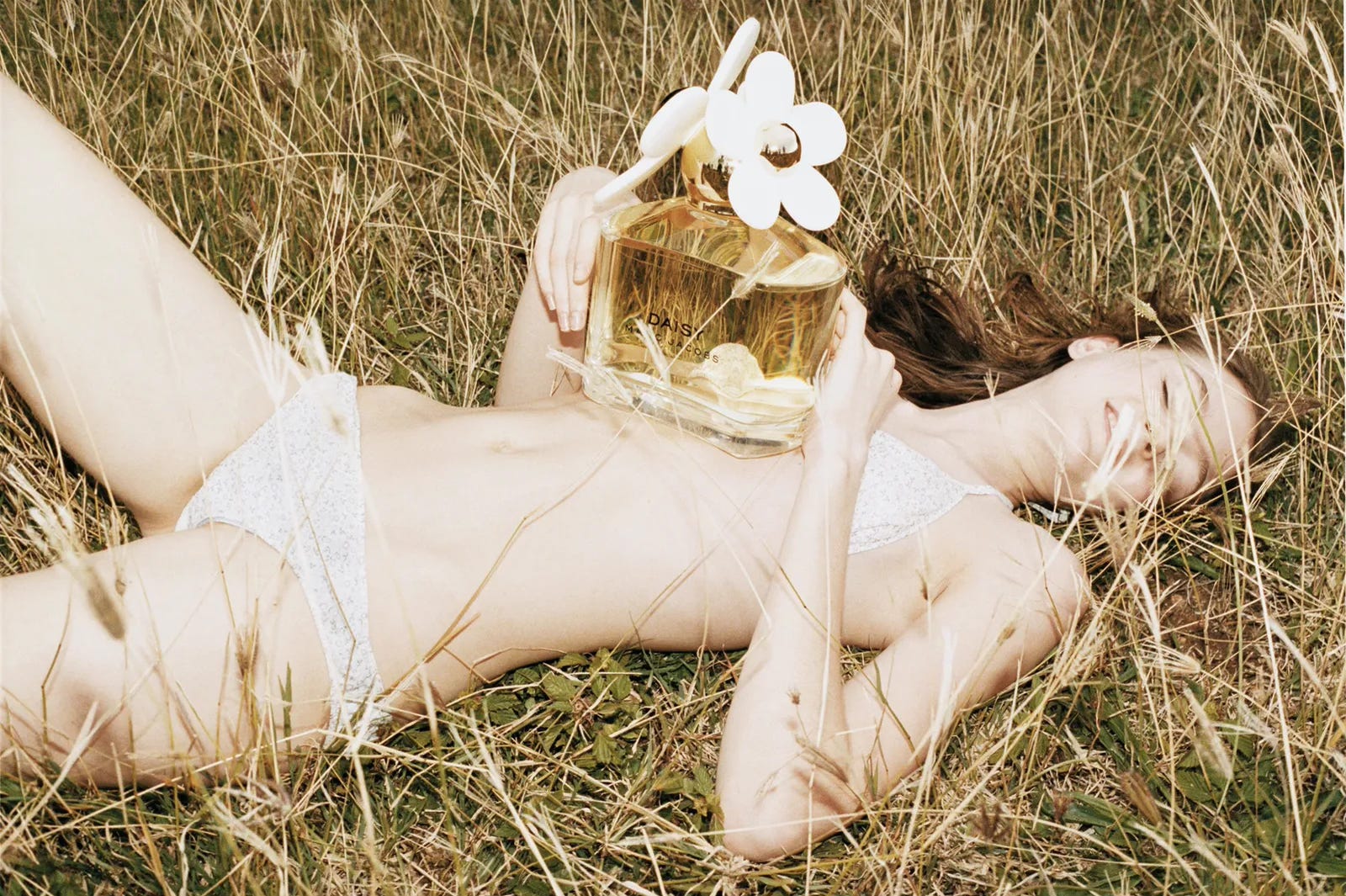
Michael Thompson built light the way others build sets. His images were clean but never sterile. He offered clarity without emptiness.
And Richard Avedon, at the very end of his career, published one of the most unusual photographic narratives in a mainstream magazine. In Memory of the Late Mr. and Mrs. Comfort ran in The New Yorker in 1995. It wasn't fashion. Not portraiture. It was a staged fiction. Twelve images. Aristocratic decay. Emotional paralysis. No product. No caption. Just sequence. Just tone.
That kind of work required space. Time. Trust. There's no commercial or editorial structure left that would commission it now.
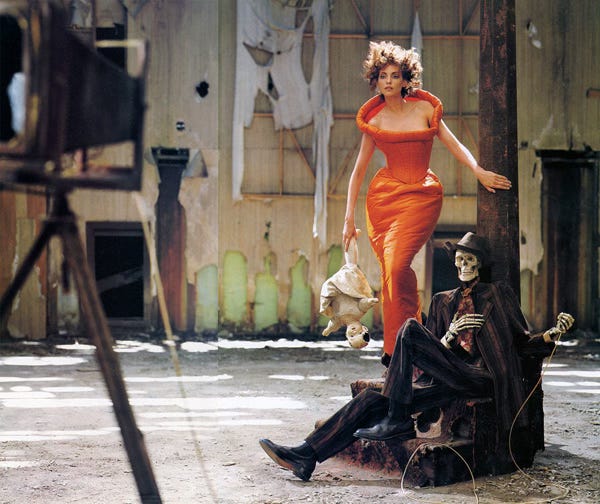
What we remember as style was never just style. It was structure.
III. The Collapse
The photographers didn't change. The scaffolding around them was dismantled.
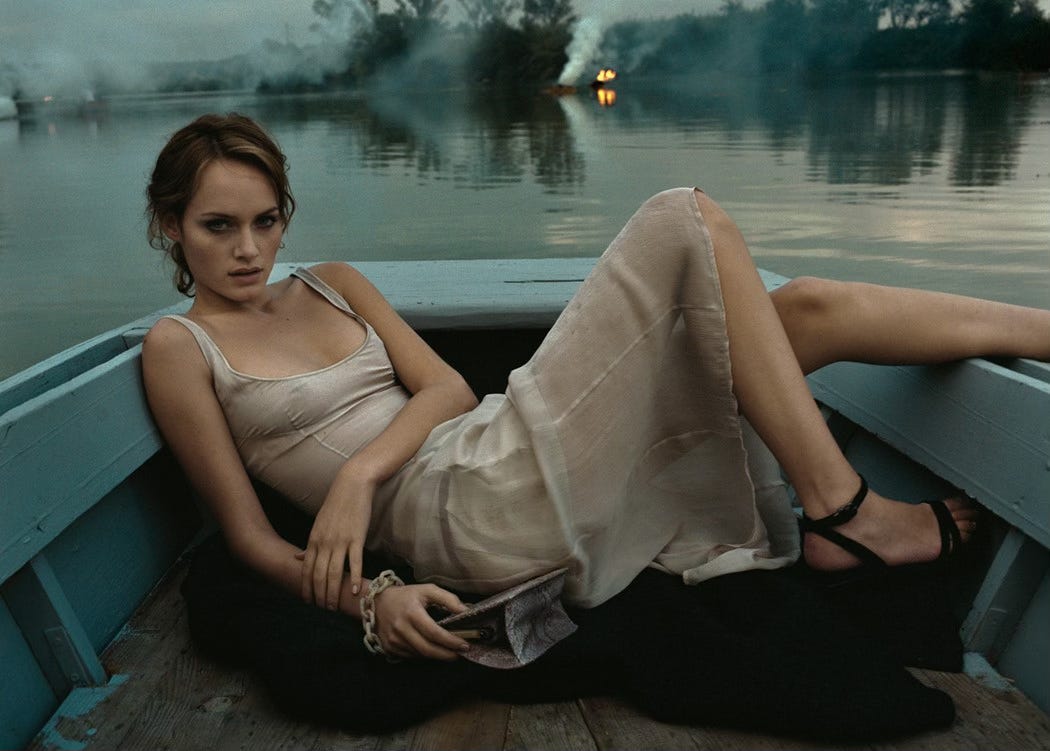
Print began to die. Budgets shrank. Editors were replaced with marketers. Layouts became grids. Columns collapsed. The twelve-page editorial became the branded carousel.
The photograph didn't vanish. It was disarmed.
Platforms replaced pages. The scroll replaced the sequence. Instagram and TikTok became the new editorial spaces. But they weren't built for photography. They were built for volume. Speed. Feedback.
The algorithm replaced the editor. It rewarded images that moved quickly. Not ones that held. Authorship wasn't necessary anymore. It became an obstacle.
Creative direction was absorbed by branding. Art directors became asset managers. Stylists became content strategists. Photographers became vendors. Layouts disappeared. Moodboards expanded.
A good photograph once had to survive its neighbors. Now it survives the feed.
Shoots that once took days now happen in hours. Often remotely. Often in fragments. There's no layout. No page. No editor.
Just output.
IV. The Emotional Fallout
What remains isn't silence. It's saturation. An endless stream of images that ask nothing. Is the work professional? Sometimes beautiful. Rarely memorable.
We look. We scroll. We save. We forget.
What used to ask for attention now only asks to be tolerated.
The visual language of the last generation still circulates. Flash. Distance. Casual eroticism. Anti-styling. Nostalgic tension. But it arrives without context. It looks familiar. That's the problem.
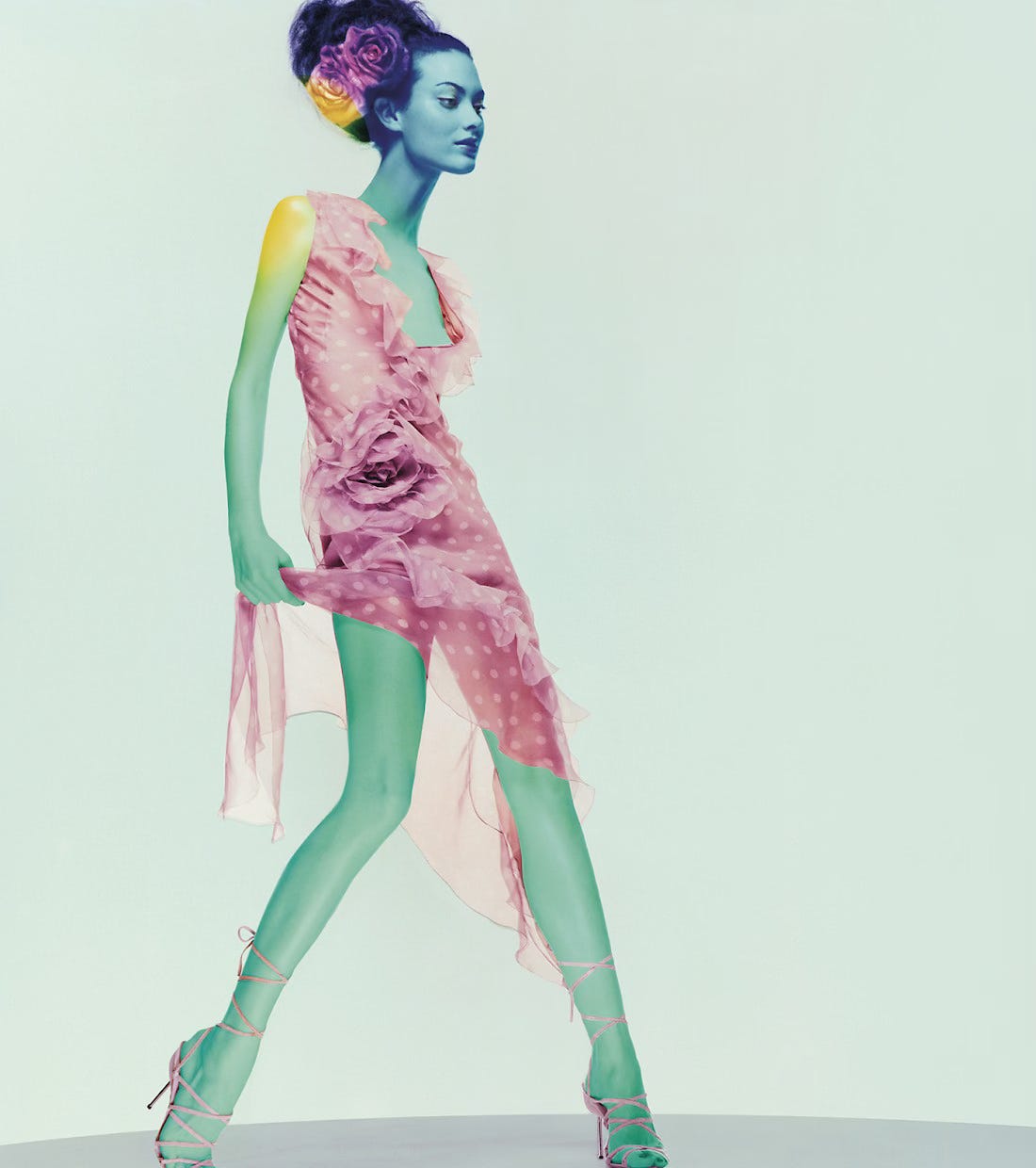
We're not witnessing the decay of taste. We're living in its flattening. Everything feels good enough.
Photography hasn't failed. It's been downgraded to atmosphere. Images no longer interrupt thought. They cushion it.
The image no longer punctuates. It loops.
V. The Pattern
Photography isn't alone. Every medium that relied on editorial friction has been softened.
Web design became templated.
Music videos became social clips.
Typography became branding.
Architecture became modular investment.
Journalism became reaction.
The editor disappeared. The algorithm remained.
First a medium is professionalized. Then it's democratized. Then it's optimized. Then it's hollow.
Photography just got there first.
VI. The Unspoken Truth
The feed is filled with references to a time most people don't remember. The washed out flash. The stiffness. The cinematic quiet. The ironic intimacy.
None of this is new. It's residue.
What feels like aesthetic instinct is often just cultural repetition with the author removed.
The last generation of photographers built the visual operating system that culture still runs on today. The images we see now are copies of copies of copies. They arrive without signature. Without weight. Without context. Without meaning.
This isn't about credit. It's about awareness.
This generation shaped what we saw. They also shaped how seeing worked.
We're still living inside the aesthetic they constructed. We just stopped noticing.
VII. The Image Remains
Photography is still everywhere. It sells. It scrolls. It circulates. It performs. But it no longer holds the room.
The image is no longer an event. It's a background effect.
The photographers are still here. But the systems that made their work matter are gone. The editing. The design. The pressure. The page.
All of it.
We scroll anyway. Not because we're looking for something. But because we've forgotten what it feels like to be stopped by anything at all.


A visual storyteller with over 20 years of experience in commercial photography, specializing in campaign development and narrative design. I work closely with art directors, creatives, and brand teams to translate ideas into compelling stories.
Vancouver | Available Worldwide
Instagram: @andre_pinces
LinkedIn: andre-pinces-photography
For inquiries, DM or email.
While many lament the fact that everything has changed no one talks about the how and the why. You have done so here with astute observation. You also raise questions without actually asking them that might be fun to explore in future posts- for example how do we as photographers work (or not work) to reinstate meaning and power to imagery (beyond the obvious i.e photojournalism.)